

Restaurant Propane Options for Busy Patios

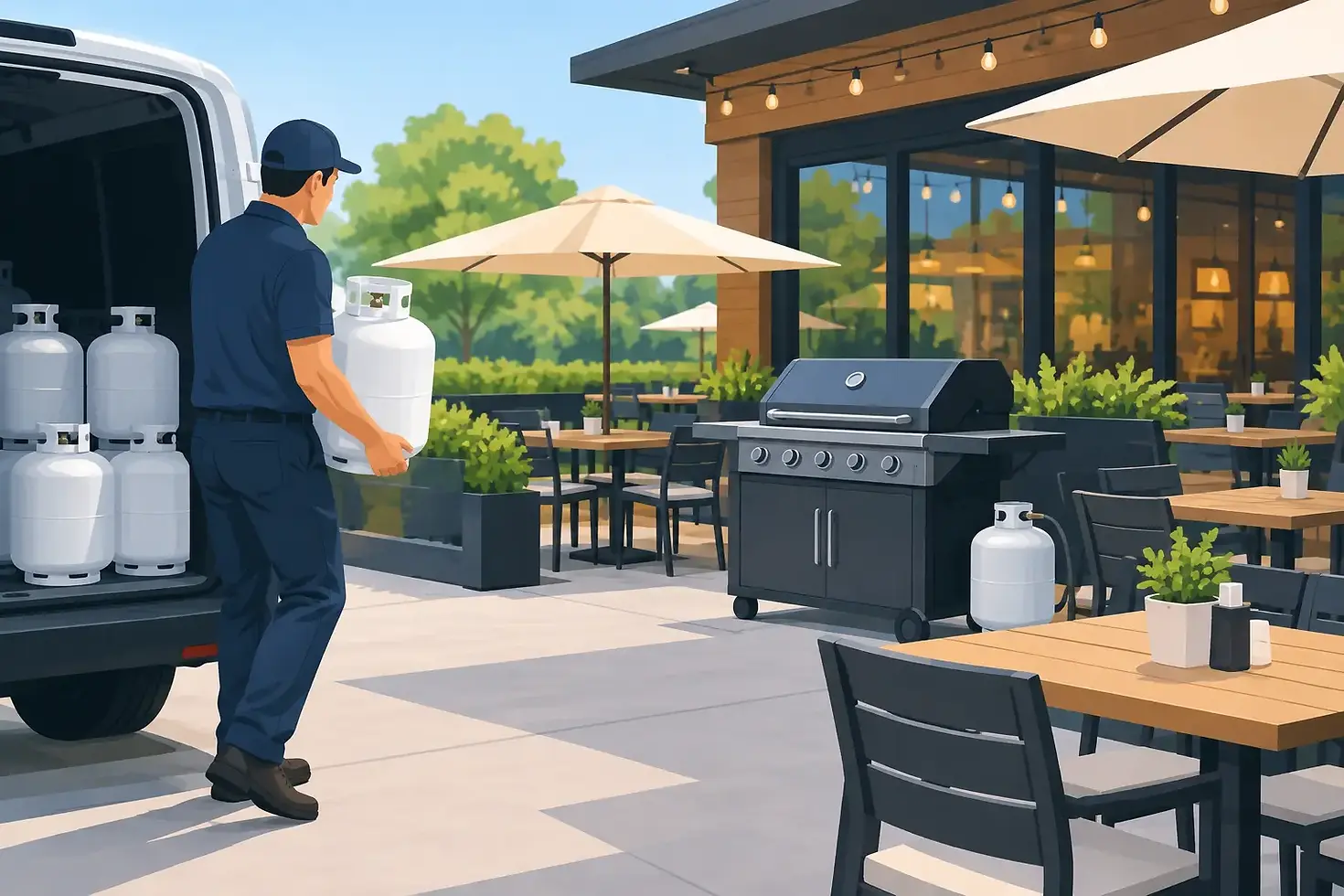
A full patio on a cool evening is not the time to discover that the last heater tank is empty. For operators weighing restaurant propane options, the real question is not simply where to buy propane. It is how to keep outdoor service running without sending staff to a refill station, storing cylinders improperly, or leaving guests cold.
Restaurants use propane differently than homes do. Demand can jump with the weather, a private event, or an extended dinner rush. A dependable setup needs enough fuel on site, a safe place to keep it, and a service plan that fits the pace of the operation.
Restaurant Propane Options That Fit Your Operation
Most restaurant patios rely on portable propane cylinders because they are flexible, practical, and compatible with common patio heaters, outdoor cooking equipment, and portable appliances. But there is more than one way to manage those cylinders.
The right choice depends on how many heaters or appliances you operate, how often they run, the amount of storage space available, and whether your team has time to monitor fuel levels. A small sidewalk patio may do well with a few spare cylinders and scheduled delivery. A large, heated terrace with regular service may need a more structured exchange program, secure storage, and frequent deliveries.
On-demand cylinder delivery
On-demand delivery works well for restaurants with occasional propane needs. You order cylinders when the current supply is low or when an event requires extra heaters. It avoids buying more inventory than you need, particularly during the shoulder seasons when patio traffic is unpredictable.
The trade-off is that someone still needs to notice the supply is running down and place the order early enough. This option can work for a small operation, but it becomes less reliable when several staff members assume someone else is tracking the tanks.
Scheduled propane service
Scheduled service is designed for patios with regular fuel use. Deliveries can be arranged around your operating pattern so full cylinders arrive before shortages affect service. For restaurants that run heaters most evenings, scheduled service removes one more task from the manager's weekly list.
This approach is especially useful during colder months, when heaters run longer and tanks empty faster. A cylinder that lasted several evenings in mild weather may not last through a busy weekend when temperatures drop. Consistent delivery helps prevent the usual last-minute scramble.
On-site spare-cylinder inventory
Keeping spare, full cylinders on site gives staff an immediate answer when a heater goes out. Instead of ending a guest's table experience or dispatching someone to pick up fuel, a trained employee can swap in a full cylinder and return the empty one to the designated area.
The key is setting a realistic par level. If you operate six heaters, having only one spare may be too tight during peak periods. If you carry far more cylinders than you use, you give up valuable space and create more inventory to manage. Your propane provider can help estimate a starting quantity based on the number and type of appliances, hours of use, and seasonal demand.
Rental storage cages
Propane cylinders should not be scattered behind the building, beside a loading door, or tucked into a storage room. A purpose-built outdoor storage cage keeps cylinders organized, accessible, and protected from casual tampering.
For commercial patios, a rental cage can be a practical answer when your operation lacks suitable storage. It creates one clear location for full and empty cylinders, helps staff follow a repeatable process, and keeps the patio or service area looking professional. Placement still matters. Follow local fire code requirements, keep cylinders upright, and maintain the required clearance from doors, exits, ignition sources, and public areas.
Bulk propane systems
Some high-volume operations may consider a larger bulk propane setup rather than managing portable cylinders. This can make sense for permanent outdoor kitchens, large heating installations, or equipment with steady, high fuel consumption.
Bulk systems require more planning than cylinder delivery. Installation, tank placement, site access, permits, inspections, equipment compatibility, and service agreements all need attention. For many restaurants, portable cylinders remain the simpler choice because they offer flexibility without a major site installation. Bulk propane is worth discussing only when your usage is high and predictable enough to justify the added infrastructure.
How to Choose Between Restaurant Propane Options
Start with actual usage, not a guess. Count every propane appliance on the property, including patio heaters, fire features, portable cooking equipment, and backup units. Then look at how many hours each appliance runs during a normal week and during your busiest cold-weather periods.
A patio heater's burn time varies by model and heat setting. Wind, temperature, and the number of hours it stays lit all change the result. Rather than relying on a label estimate, track how quickly your operation goes through cylinders over two or three busy weeks. That record will show whether you need more spare tanks, more frequent delivery, or a different equipment mix.
Next, consider the cost of interruption. If one empty tank means a table asks to move indoors or leaves early, the price is larger than the cylinder itself. Outdoor guests often make their comfort decision quickly. Heat that fails halfway through a meal can turn a strong service experience into a complaint.
Then consider labor. Sending a staff member off-site for propane creates lost time, vehicle use, and unnecessary handling of heavy cylinders. It also leaves your team making a fuel run during the same hours they should be focused on guests. Delivery is often a better operational choice because it moves that task outside your restaurant.
Safe Handling Is Part of the Service Plan
Convenience should never mean cutting corners. Propane is a safe, effective fuel when equipment is used correctly and cylinders are handled properly. Make fuel checks part of your opening or closing routine, especially when heaters are in daily use.
Staff responsible for changing cylinders should know how to turn appliances off before the swap, inspect the cylinder and connection for visible damage, keep the cylinder upright, and check that the connection is secure. If there is a propane odor, a damaged valve, a hissing sound, or a suspected leak, stop using the equipment and follow your emergency procedures. Do not try to repair a cylinder or valve on site.
Cylinders belong outdoors in an approved area, away from ignition sources and high-traffic pinch points. Never store them in a basement, enclosed room, or vehicle. Do not leave them lying on their side. A simple written process helps, particularly when seasonal staff or multiple shifts share responsibility for the patio.
It is also smart to identify who owns the fuel count. A host, patio lead, facilities manager, or closing manager can record empty cylinders and confirm the next delivery. When everyone owns the job, it is easy for no one to own it.
Plan for the Busy Season Before It Starts
The best time to organize propane service is before the first busy patio weekend. Review your heater inventory, inspect storage, estimate peak demand, and arrange a delivery rhythm that leaves room for weather swings and special events.
In Toronto and across the GTA, spring and fall can bring sharp temperature changes from one night to the next. A patio that barely uses heaters on Tuesday may need every unit running on Friday. Build extra capacity into the plan instead of treating full cylinders as an emergency purchase.
Bbqgasguys supports commercial patios with propane delivery, storage cage rentals, and patio heater service so operators can spend less time managing tanks. The goal is straightforward: keep fuel available, keep the site organized, and keep the patio ready for guests.
A good propane setup is mostly invisible to customers. They simply get a warm table, a comfortable meal, and one more reason to stay for dessert.


Comments